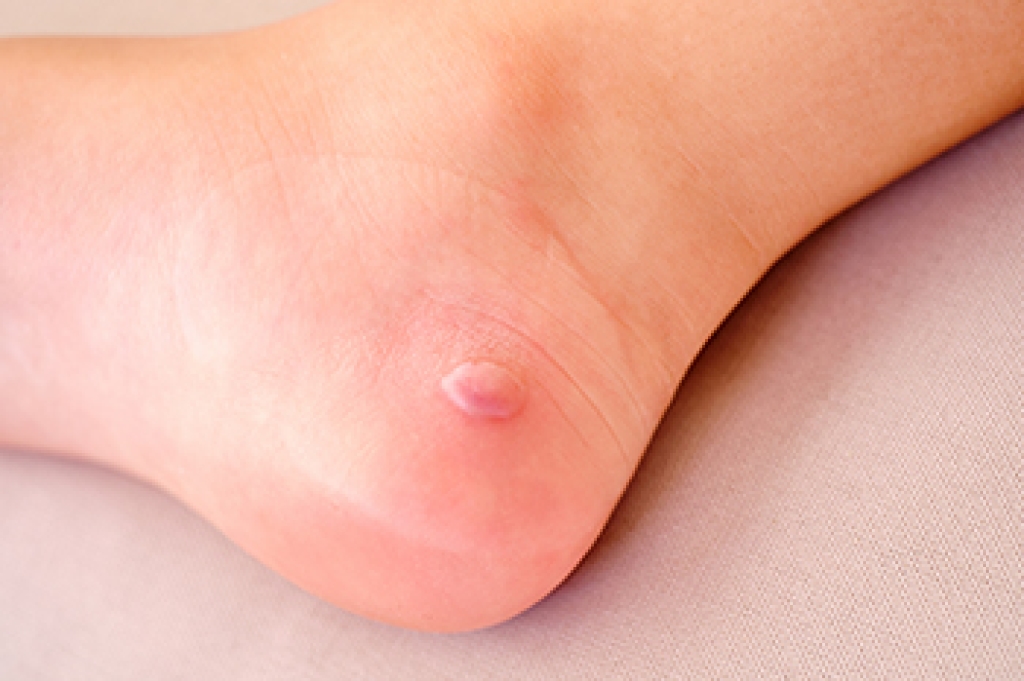
Blisters on the feet develop when friction, heat, or moisture causes the upper layer of skin to separate and fill with fluid. They are common after long walks, wearing new shoes, or increased physical activity. Although they may seem minor, blisters can become painful and interfere with normal movement. The area often appears raised, clear, and tender to the touch. If the blister breaks, the exposed skin underneath can feel raw and sensitive. In some cases, redness, warmth, or drainage may signal infection. People with diabetes or circulation concerns should be especially cautious, as even small skin injuries can lead to complications. A podiatrist can evaluate the blister to determine whether it should be drained safely, protected with proper dressing, or treated for infection. Treatment may also include guidance on footwear, moisture control, and targeted exercises to reduce friction and pressure. If you have painful or persistent blisters on the feet, it is suggested that you make an appointment with a podiatrist for proper evaluation and care.
Blisters are prone to making everyday activities extremely uncomfortable. If your feet are hurting, contact Cory Brown, DPM of Cory Brown, DPM. Our doctor can provide the care you need to keep you pain-free and on your feet.
Foot Blisters
Foot blisters develop as a result of constantly wearing tight or ill-fitting footwear. This happens due to the constant rubbing from the shoe, which can often lead to pain.
What Are Foot Blisters?
A foot blister is a small fluid-filled pocket that forms on the upper-most layer of the skin. Blisters are filled with clear fluid and can lead to blood drainage or pus if the area becomes infected.
How Do Blisters Form?
Blisters on the feet are often the result of constant friction of skin and material, usually by shoe rubbing. Walking in sandals, boots, or shoes that don’t fit properly for long periods of time can result in a blister. Having consistent foot moisture and humidity can easily lead to blister formation.
Prevention & Treatment
It is important to properly care for the affected area in order to prevent infection and ease the pain. Do not lance the blister and use a Band-Aid to provide pain relief. Also, be sure to keep your feet dry and wear proper fitting shoes. If you see blood or pus in a blister, seek assistance from a podiatrist.
If you have any questions, please feel free to contact our office located in Lewiston, ID . We offer the newest diagnostic and treatment technologies for all your foot care needs.
